Tuesday, February 13, 2018

Kristin Lenoir - Iconic Images


           The execution of Nguyen Van Lem occurred during the time of the Vietnam War. An Associated Press photographer and former Marine, Eddie Adams, standing only a few feet away from the sudden execution, took the photo on February 1, 1968. With only a film camera, Adams managed to catch the exact moment the gun was shot at Nguyen. Brigadier General Nguyen Ngoc Loan walked into the street where Nguyen Van Lem was handcuffed and General Nguyen quickly yet casually extended his arm out and shot Van Lem point blank in the head. In the photo itself, you see Van Lem’s face contorted from being caught at the exact moment the bullet made contact.
            The official name for this photograph is the Saigon Execution and was taken exactly 50 years ago this year. The photographer, Eddie Adams, only clicked his shutter once and was able to catch the photo that became one of the most famous war photos in history. Many compared his photo to that of photographer Joe Rosenthal’s photograph of the U.S. Marines raising the flag at Iwo Jima during World War II. But Adams grew to hate his photo. He claimed there was too much information missing about what was really happening, but nevertheless, Adams still won a Pulitzer Prize for capturing such a gruesome and raw moment of the brutality of the war. In reality, the photo was not of what might appear to be a Vietnam General gunning down an innocent civilian named Nguyen Van Lem; instead it was of Nguyen Van Lem, an assassin and leader of the Viet Cong death squad who made their targets South Vietnamese National Police officers and their families. The Viet Cong were “English Vietnamese Communists” who fought against South Vietnam.
            After Eddie Adams captured the shot, General Nguyen turned to Adams and stated, “They killed many of my people, and yours, too,” then simply walked away. Eddie later stated that even though the General killed Van Lem, Adams “killed the general with my camera.” Loan’s life was changed forever with the world believing he was a reckless murderer. He was a hated man for the rest of his life, but died in his home July 14, 1998. Adams was able to write a eulogy for General Loan in Time magazine and was able to better the image he created for him in the first place.
            The photo did not do much about the war and America’s involvement. But once another photo was taken and shown to the world of a young 9-year-old girl screaming as she ran naked down the road because of a napalm attack on her village, America’s revulsion grew even greater towards he war.


           Malcolm Browne was a 30-year-old Associated Press permanent correspondent in Saigon, Vietnam. Browne was already aiming for the Pulitzer Prize for his stories and photos, but the goal came sooner than expected on June 11, 1963.
Buddhists in South Vietnam were facing their own war by a constant growing tension under Catholic, Ngo Dinh Diem who was the first president of the Republic of Vietnam. The President’s regime for the Buddhists was repressive and refrained them from fully practicing their religion. On May 8, 1963, many Buddhists decided to fly the Buddhist flag even with a government ban restricting the showing of religious flags. Because of their protest, South Vietnamese soldiers opened fire on the Buddhists and killed a total of nine. Between May 8 and June 11, monks walked streets and stopped for various demonstrations and memorial services for those who were killed in the shooting. Finally, on June 1st, went to Malcolm Browne to inform him of two monks who would be committing ritual suicide in protest against the regime of President Diem.
The Immolation of Thich Quang Duc occurred at exactly 9:22 AM on June 11, 1963. Malcolm Browne made it to the pagoda where the monks and nuns were chanting a typical funeral chant and getting ready to walk out into the streets. The group made their way to central Saigon until they decided to stop at a major intersection where a car drove up and three monks got out, two young and one much older. The older monk sat down in the middle of the intersection and the two young monks came over and covered him with gasoline. The older monk pulled out a matchbook, lit a match, and placed it in his lap and set himself on fire. He never cried out, never even changed the solemn expression on his face. But once he was too blackened to recognize, the monks declared him dead and brought a coffin.
 The photo Browne captured of the burning monk only took 15 hours over 9,000 miles to become breaking news. The photo was published on June 12, 1963, in American newspapers across the country. Due to the photo, President John F. Kennedy “ordered a review of his administration’s Vietnam policy.” The photo became known as “The Ultimate Protest” and created the path for other iconic images from the Vietnam War such as the photo of the execution of Nguyen Van Lem and the young girl running nakedly away from a napalm attack.


President Clinton and White House intern Monica Lewinsky. It was a scandal of the ages and caused only the second president in the history of the U.S. to be impeached.
Dirck Halstead, the senior White House photographer at the time, snapped a photo of President Clinton and intern Monica Lewinsky embracing in the middle of a large crowd on October 23, 1996, only a few days before the 1996 presidential election. At this time, no one knew of the affair between Lewinsky and Clinton, which had been going on since November of 1995.
It wasn’t until late 1997 when Linda Tripp, a friend of Lewinsky’s, spoke up and shared an audio tape of her and Lewinsky speaking about the affair and Lewinsky sharing the details. By August 10, 1998, Halstead’s photo of the Clinton/Lewinsky embrace became the front cover of Time magazine with an article inside about the affair.
The interesting story behind the photo is the fact that Halstead thought nothing of it. He snapped photos the whole night those few days before the ’96 election, but never truly considered the powerful photo he had obtained. Halstead was still shooting this event with a film camera instead of switching to the digital, which ended up saving his photo of Clinton and Lewinsky. After the news broke out of the Clinton/Lewinsky affair, Halstead asked his assistant to look through his discarded film slides within his archives. Sure enough the photo of Clinton and Lewinsky embracing that fateful day was found. This photo ended up winning Halstead an Eisie Award for cover photography. He was praised for shooting with film because the image ended up being saved rather than deleted if it were taken with digital.

Matthew TeBos-Iconic Photos

This iconic photo was taken of young JFK Jr. right after his father died. The time frame was Nov. 25, 1963. The photographer was Dan Farrell. He was a veteran newsman sent to cover the funeral of President John F. Kennedy. The story behind this image is that actually Farrell almost didn't get the image as he had about two seconds to get the shot. The image was printed in Life magazine. And this image is iconic because it is full of sadness but also has patriotism in this photo as well.


The next iconic image I have to share is of Martin Luther King Jr. He was the leader of the Civil Rights movement in the mid-1960s. The photographer was Steve Shapiro. He was a photographer for Life magazine in the 1960s and was interested in the civil rights movement when it started appearing more. Shapiro traveled down to Selma to photograph the Selma walk and other important events.
This photo is King giving a speech to his followers. It is ironic because it captures the determination he had as a leader in that time period.


The final photo I have is the pop icon, Michael Jackson. The photographer for when he was a just a teen starting out to worldwide superstar is a man named Harrison Funk. He went on all of Jacksons tours and got pictures of all of the icons performances. This picture is iconic because it is Michael performing one of his hit songs on stage. Funk said that Michael changed the world with his rebranding of the moonwalk, and when Michael got his star on the walk of fame it was Funk's career highlight.


Monday, February 12, 2018

Jenny Tran- Iconic Photos

JENNY TRAN
PHRENE HOEKSEMA
PHO 238
February 12, 2018
Research Project #1
Journalist Malcolm Browne took this iconic photo of the self-immolation of Buddhist monk Thich Quang Duc in Saigon in 1963. The monk committed suicide to protest what he called government persecution of Buddhists. Browne, who worked for the AP and later The New York Times, died Monday at age 81.

This photo of a Vietnamese Mahayana Buddhist monk Thich Quang Duc burn himself in Saigon was taken by the photographer Malcolm Browne in in June, 1963. Malcolm Browne was American photographer and journalist. In 1963, Browne won the Pulitzer Prize and the World Press Photo of the Year by the image of self-immolation of Buddhist monk Thich Quang Duc.  Browne had been in Vietnam for couple years and he realized things turned pretty ugly in the central Vietnam. Around that time, the South Vietnamese government Ngo Dinh Diem held a public ceremony proclaiming the new policies of banning Buddhism and dedicating Vietnam to Catholic church. His policies disappointed and angered a lot of Buddhist monks and Vietnamese people. Browne was really interested in Buddhist issues so he came to be friendly with a lot of monks and learned more about the problems with them. Around the springtime of 1963, Browne noticed there was something off between the monks. They began to hint that there would be something big happen. Finally, that horrific morning had come. All the monks and the nuns started to walk toward the central of Saigon. When they reached there, the older monk, Thich Quang Duc, sat at the center of the intersection of two main streets in Saigon. The other monks quickly formed a circle around him. The two young monks poured the gasoline all over Thich Quang Duc and then they started to lighten the matchbook and dropped it into his lap. Malcolm Browne was right there and quickly took his camera and capture this horrific scene. The photo became an iconic image because it captured the significant protest to Buddhist monks against the discrimination laws of the South Vietnam Government. Everyone that witnessed this event would not able to forget this terrified scene. Browne said that he could not believe in his eyes. He did not even exactly when the monk died because the monk sitting calmly and never yelled out of pain.


A one-year-old victim of the Oklahoma City bombing is cradled by a local fireman.
(Charles H. Porter IV)

This iconic photo was taken by the photographer Charles Porter in April 19, 1995. Before, Porter was an aspiring journalist at the time and he was working as a credit officer at Liberty Bank in Oklahoma City. Then he became a freelance photographer. Charles Porter won Pulitzer Prize for his photograph of a firefighter holding a dying infant which became a symbol of Oklahoma City bombing. He also credited 1982 winner John White of Chicago.
In April 19, 1995, Timothy McVeigh blew up about 4,800 pounds of fertilizer and fuel oil and it destroyed the Alfred P. Murrah Federal government building and killed 168 people. It was a huge explosion. While rescuing the victims, the firefighter Chris Fields shouted when he found out there was a 1-year old infant in the building, “I have a critical infant! I have a critical infant!" He held the wounded baby into his arms and checked the baby’s signs of life but unfortunately the infant was dead. At that time, Charles Porter was standing about three feet apart and he was raising his camera to capture the moment. The photo was considered an iconic image because it captured one of the most dramatic tragedies in America which remarked the largest act of domestic terrorism. It was the heartbreaking scene of a firefighter holding a dying infant in 1995 Oklahoma City Bombing.

In this April 22, 2000, photo by AP photojournalist Alan Diaz, Elian Gonzalez is held in a closet by Donato Dalrymple, right, as government officials search for the boy in his relative's home in Miami.
(AP Photo/Alan Diaz)

This iconic image was taken by AP photojournalist Alan Diaz in April 22, 2000. Alan Diaz was born in New York in 1947. He began his photography career in 1978 and later on he joined the Associated Press as a freelance photographer and became a staff photographer there. Alan Diaz won the Pulitzer Prize in 2001 for his breaking photograph of an armed U.S. immigration agent pulled the gunpoint at a terrified boy, Elian Gonzalez. In November 1999, a 5-year old Elian Gonzalez with his mothers attempted to escape from the communist Cuba by fleeing across the Florida Strait. However, their boat sank but Elian was rescued by a fisherman. Then, he was taken to live with his relatives in Little Havana, Miami. Elian’s father and the Cuban leader Fidel Castro wanted him back in Cuba so in April 1999, Clinton administration demanded that Elian be turned over. However, Miami's anti-communist Cuban-American leaders refused. In the April 2000, the United States Border Patrol’s team was breaking into the house and confronting Elian to take him back in Cuba. Then, there were a lot of protests to try to stop the federal agents. They ripped and burnt the American flag. The photo was considered as an iconic image because by the Elian Gonzalez drama, people paid more attention to Cuban-American voices. We can understand more about the Cuban exiles’ struggles and the heated relationship between the U.S. government and the Cuban leader Fidel Castro.

Saturday, February 10, 2018

Iconic Photos - Hannah Taplin


Birmingham, Alabama protests (!00 Iconic Photos, Time)
Subject(s): A protesting man in Birmingham, Alabama is attacked by a police dog. 
Photographer: Charles Moore – The native from Alabama and son of a Baptist preacher was a photographer for
the Montgomery Advertiser when the anti-Jim Crow protests were going on in the summer of 1963. 
Time Period: 1960s (Civil Rights Movement)
About the era of the photo: The culture in the south was keen on keeping black Americans separate from the white populace. In Birmingham, Alabama, the city was ruled by a white supremacy, headed by Bull Connor, 
the Public Safety Commissioner It was the rise of leaders such as Medgar Evers, James Lawson, Dr. King, and Malcolm X and actions of lunch counter sit-ins, the bus boycotts, and marches that inspired the push for liberation and freedom. Dr. King’s idea was to capture the movement through TV and photos in order to challenge segregation and racial inequality through white public outrage in the north. He wanted white Americans in the north to see their reality.
Why it’s iconic: It held up a mirror to the reality of unearthing a deep system of segregation and 
white supremacy in the South. It proved to all of America that ending segregation was more than just eroding the culture of the south
but restoring the humanity of an entire people. 


Human Rights Salute at the 1968 Summer Olympics (!00 Iconic Photos, Time)

Subject(s): The black-socked and gloved Tommie Smith and John Carlos, gold and bronze medal winners in the 200 meter dash of the 1968 Mexico City Olympics, raise their fists and bow their heads in protest of racial and socioeconomic discrimination. Silver medal winner and ally Peter Norman wears a human rights pin beside them.

Photographer: John Dominis – A lifetime photographer known for capturing moments that are unexpected.

Time Period: 1968 (Post Civil Rights Movement and Civil Rights Bill Passing)

About the era of photo: 1968 was a very turbulent year via politics, the assassinations Dr. Martin Luther King Jr. and Senator Bobby Kennedy, and protests against social norms and the Vietnam War. With the passing of the Civil Rights and Voting Rights Acts passing in Congress, many Americans believed that African Americans would be able to start to have equal opportunities in the United States; however, said African Americans did not feel that way and were left without federal and state protections.

Why it’s iconic: In this age of Colin Kaepernick and other black athletes using their platforms to protest  police brutality and bring awareness to issues plaguing POC in the United States in the 21st Century, it shows that this salute to push for human rights and basic dignity has always been there, even when in such an age of a giant forward movement of civil rights had done so much in legislation and socially. This photo is a symbol of its time but also a symbol of the fight that is still happening and has always been brewing under the surface and perhaps always will be.


Kent State Shootings (100 Iconic Photos, Time).

Subject: Mary Ann Vecchio kneeling over Jeffrey Miller, who was fatally wounded at the Kent State protests in 1970.

Photographer: John Paul Filo - Filo was a student and a part-time news photographer when he took that photo, capturing the fleeting of innocence within the eyes of Vecchio. He later won the Pulitzer Prize after it was published by the New York Times on the front page.

Time Period: 1970 (Vietnam War)

About the era of photo: During the Vietnam War, there was a large split between the generations.The older generation (The Greatest and the Silent) were for the war and supported the troops, and the Baby Boomers were generally very much against it and marched through the sixties and up until the end of the war. There was a lot of tension and violence against our own young people and it bubbled up on May 10th, 1970,  at Kent State in Ohio, where four college students were killed and nine injured by the National Guard within 13 seconds.

Why it’s iconic: This photo not only showed that the severe scar between those in power and those protesting it, but it also portrayed that the war in Vietnam had crossed over and settled in the heartland. 

Tuesday, February 6, 2018

Hannah Taplin: Four photos


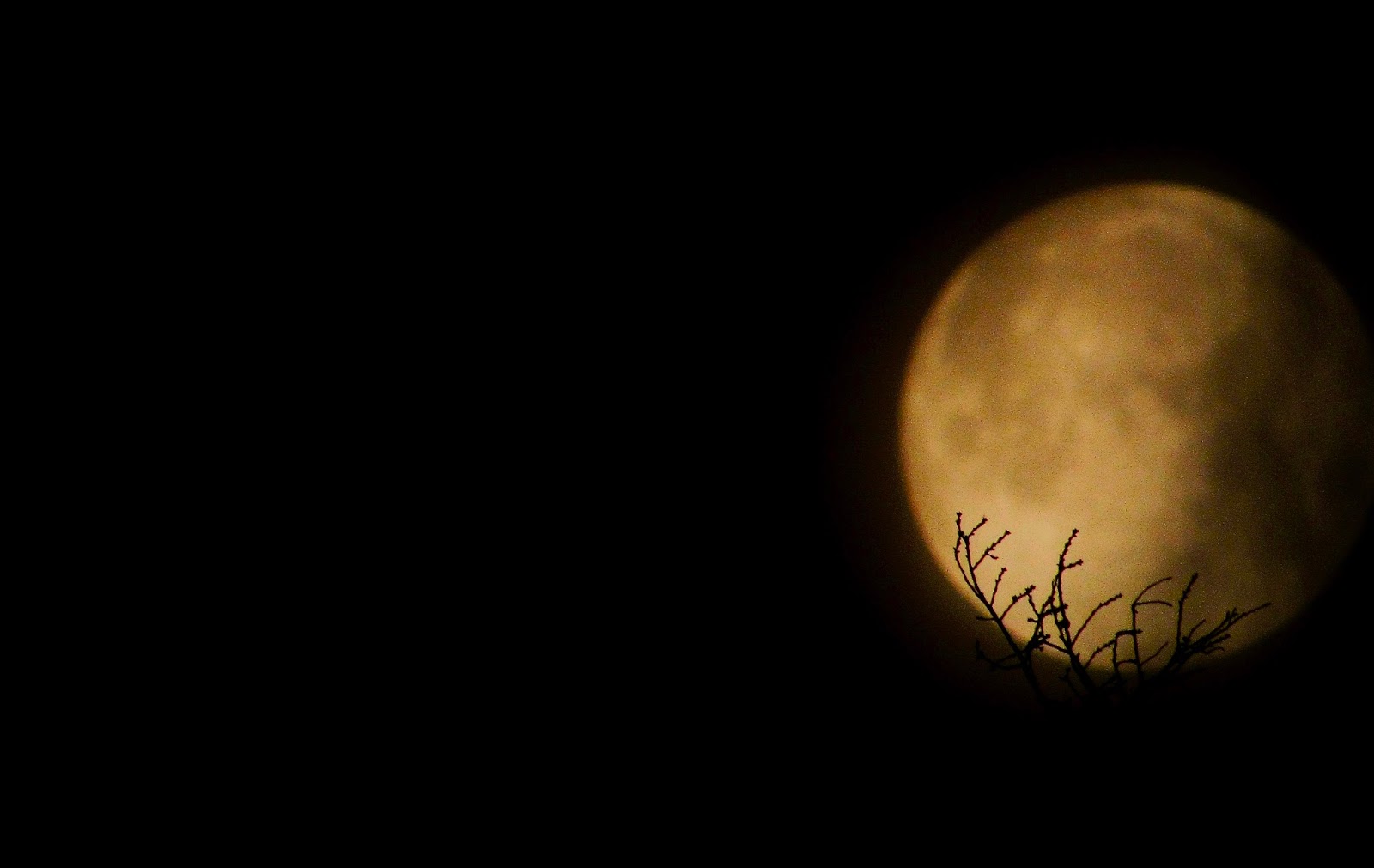
Depth of Field: On the chilly night of the Supermoon, the moon held by a branch in Grand Rapids, Michigan, January 30th, 2018. 


Stop motion: A young violinist plays in a Grand Rapids Church. 

Action:  A young man walks down the sidewalks of Cornerstone University.

I TRIED AND TRIED TO GET A PANNING PHOTO AND FOR THE LIFE OF ME I COULDN'T GET ONE.


4 photos// JuChan Moon


Panning
February 6, 2018; Ben Overholt walks on the campus of Cornerstone University 
Freeze Motion
February 6, 2018; Ben Overholt jumps up to start his workout for soccer.


Blur Motion
February 6, 2018; Ben Overholt rushes down the stairs in the Hanson building.


Depth of Field
February 6, 2018; Paul Bak checks his phone in a cafe in Grand Rapids, Michigan


Sarah Asprec: 4 Photos

 February 5, 2018. Cornerstone University. A successful hit while playing billiards.
(Blur Motion)

 February 5, 2018. Cornerstone University. Tyler VanLoo calculates his next move while his turn.
(Freeze Motion)

 February 5, 2018. Cornerstone University. Zack Cantalice hits the white ball with good speed and accuracy.
(Panning)

 February 5, 2018. Cornerstone University. A calm moment before the competition begins.
(Depth-Of-Field)