February 17, 2018; Mol Arena. Four younger children have a dance off to win a prize, during halftime.
February 17, 2018; Mol Arena. Camera man captures video of the score; Cornerstone up 40, Lawrence Tech 33.
February 17, 2018; Mol Arena. Lawrence Tech men's basketball team huddles in close for a few encouraging words before the start of the game.
February 17, 2018; Mol Arena. Cornerstone senior Kyle Seigenga (32) gets matched to Lawrence Tech senior Lucas Vojak (35).
February 17, 2018; Mol Arena. Two Cornerstone men's basketball players rush in to get a hold of the ball.
Tuesday, February 20, 2018
Sarah Asprec: Sports Photography
February 17, 2018; Mol Arena.Senior Michael Bradshaw (#23) plays defense against Lawrence Tech in the second half.
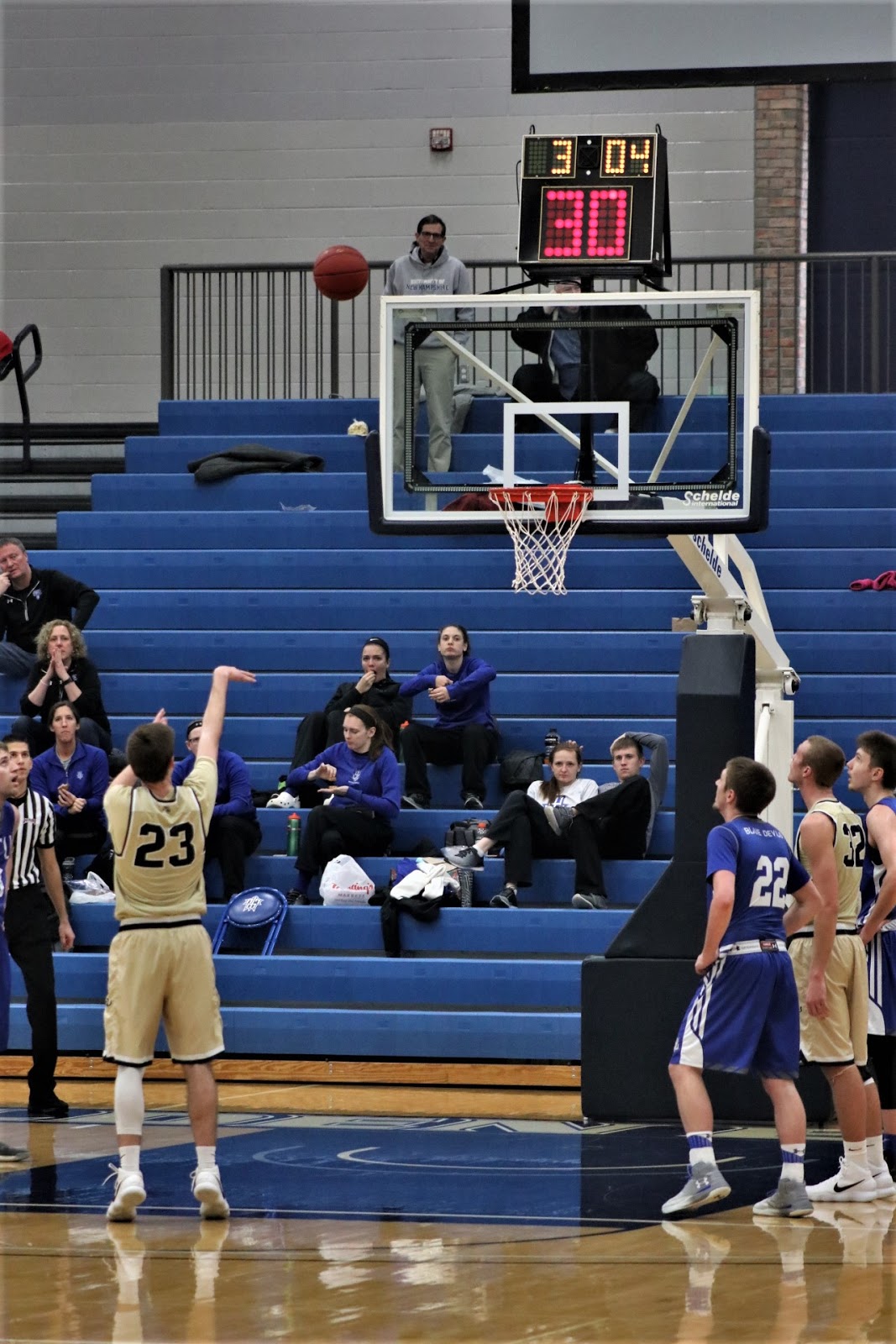
February 17, 2018; Mol Arena. Senior Michael Bradshaw (#23) gaining over two foul shots, successfully making one of them.
February 17, 2018; Mol Arena. Despite the block from the opposing team, senior Kyle Steigenga (#32) makes his three pointer shot.
February 17, 2018; Mol Arena. On the sidelines, the Cornerstone Cheer Team supports their team with great enthusiasm.
Jenny Tran- Sports Photos
Monday, February 19, 2018
Matthew TeBos - Sports!
Saturday's game. Kyle Steigenga dribbles the ball down the court. He's the top scorer in all of Michigan.
Another wild picture I got from Saturday's game.
Hannah Taplin – Sports Photos
Tuesday, February 13, 2018
Sarah Asprec- Iconic Images
“THE FALLING MAN”
September 11, 2001; a man falling off the World Trade Center
Richard Drew (New York City based/Associated Press photojournalist):
-one of four press photographers present at the assassination of Robert F. Kennedy
-a British documentary about this photo premiered on the Discovery channel (Sept. 10, 2007)
-sensitive image; many outlets refused to publish→ “we have to take pictures of it...I’m recording history.”
-a quiet picture, no violence/blood, but personal impact for people
-CNN top 25 most iconic images/New York Times Book Review (first page)
“Raising the Flag at Ground Zero”
September 11, 2001; raising flag at World Trade Center
Firefighters George Johnson, Dan McWilliams, & Billy Eisengrein
Thomas E Franklin (award-winning photographer/college professor at Montclair State University)
-was a photographer at The Record (2001); he had just gotten back from an assignment in the Dominican Republic and was in the office in Hackensack, N.J.
-photo featured on US Postal Service’s Heroes fundraising stamp (raised $10million)
-LIFE “100 Photographs That Changed the World”
-”It was the very beginning of the digital age, before social media and it was documented very well.” --> he believes if the same event would be photographed today, it would be more painful; “more doesn't necessarily mean more”
1993; Southern Sudan during famine/child starving on the way to a food camp
Kevin Carter (South African photographer)
-photo brought Carter fame/attention from the world towards the reality of situation
-photograph won the Pulitzer Prize for Feature Photography→ received criticism after Carter said he drove away vulture, but many questioned why he did not help further
-soon after award, Carter committed suicide; many people believe his career brought forth much pain/depression
Madison Herrema // Iconic Images
Madison Herrema
Phrene Hoeksema
Photojournalism
February 13, 2018
Iconic Images
The Falling Soldier
Time period: 1936, during the Spanish Civil War.
Photographer: Robert Capa- (Friedmann Endre Erno), from Hungary. He was a war photojournalist who got up close and personal with his images. “If your pictures aren’t good enough, then you’re not close enough.” Picture Post termed him "the greatest war photographer in the world" in 1938.
Story behind the photo: During one charge, Capa held his camera above his head and clicked the shutter. The result is an image that is full of drama and movement as the shot soldier tumbles backward. Robert took this photo without looking through his viewfinder. This was taken at the beginning of the Spanish Civil War.
Why is it considered an iconic image?: Widely considered one of the best combat photographs ever made, and the first to show battlefield death in action. This shows the sudden death moments in war. It brought war up close and personal for everyone to see.
Flag Raising on Iwo Jima
Time period: 1945, on Iwo Jima.
Photographer: Joe Rosenthal- Son of Russian Jewish immigrants. Looked for work during the Great Depression and took interest in photography. Became employed as a photojournalist for the Newspaper Enterprise Association.
Story behind the photo: In February of 1945 The Allies needed a base near the Japanese shore. They scouted out an area named Iwo Jima. After months of fighting and the loss of many Japanese lives, The U.S. gained control of Iwo Jima. After the victory, 4 U.S. Marines planted our stars and stripes on the Japanese territory. This began the strenuous campaign of the eventual defeat of the Japanese.
Why is it considered an iconic image?: The photograph of six men on a tiny island in the pacific was immediately a symbol of victory and heroism, and became one of the most famous, most reproduced photographs of all time.
The Situation Room
Time period: May 1, 2011
Photographer: Pete Souza- Freelance photographer in the Washington D.C. The Chief White House Photographer.
Story behind the photo: In 2011, our most important politicians sit in the situation room. What they are watching will be remembered in American history of years to come. This group sits and watches the operation of Seal Team Six assassinating Osama Bin Laden
Why is it considered an iconic image?: The photo is iconic because it shows the behind the scene emotions of our most important leaders. This is what Americans do not see, the thoughts and expressions of those that draw up these plans. This point is extremely iconic because it is the point when our nation destroys the man who put our country in mayhem. This one death was the revenge of thousands of the innocent Americans that lost their lives in that devastating attack in 2001.
Subscribe to:
Posts (Atom)